
Client Western Sydney University
Builder Mirvac
New recycled plastic sheet hoarding:100%
Everything used on this job was recycled materials. 6 star green.
Builder Mirvac wanted to get green star rating for the build at Western Sydney University.
The hoarding built was a few infills of the original hoarding, the old hoarding was rotten from weathering, this won’t happen with the new recycled plastic sheeting
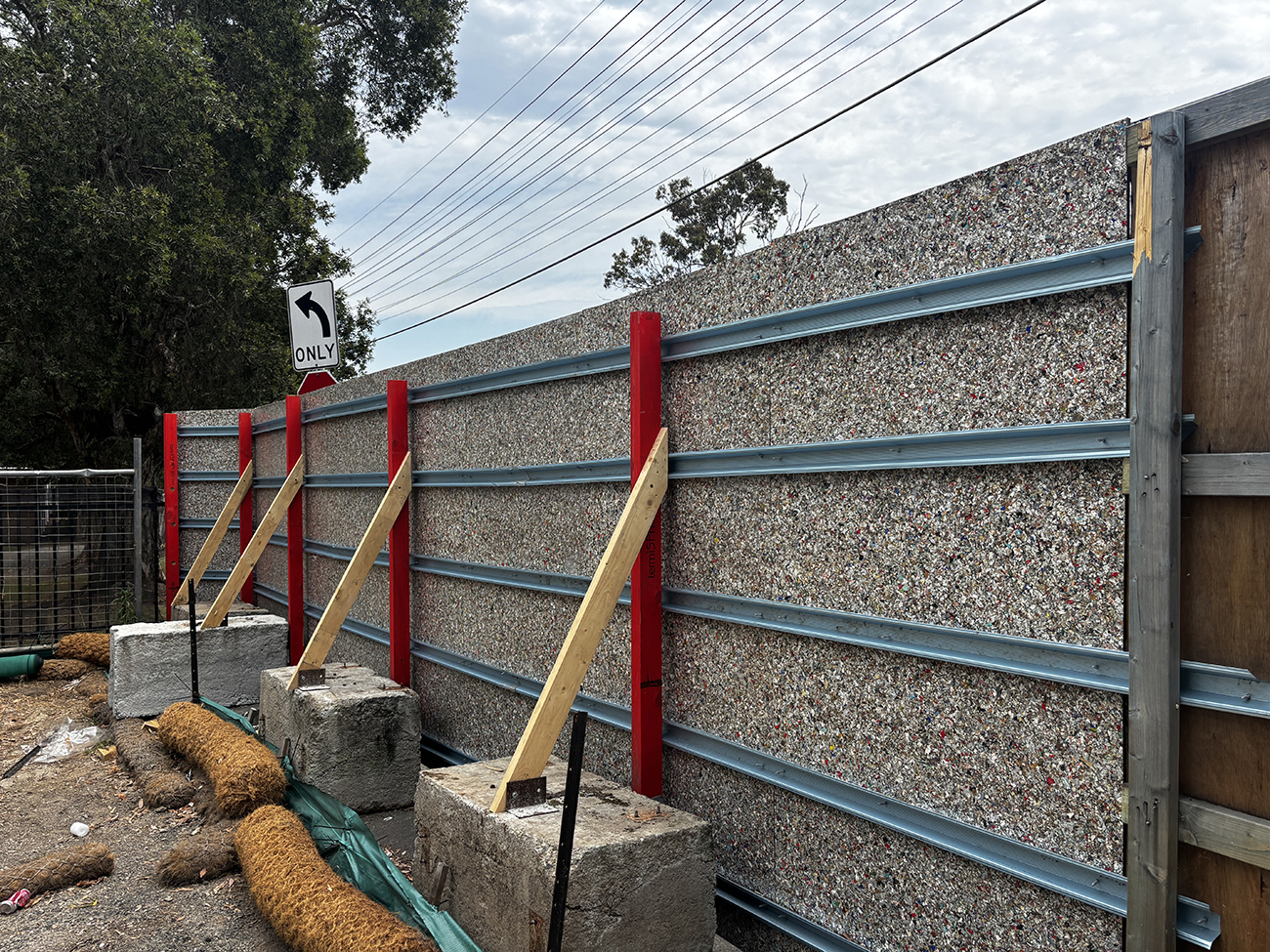
Sydney-based hoarding specialists such as Site Hoardings are increasingly specifying 100% recycled materials for temporary site barriers on projects across metropolitan Sydney and surrounding municipalities. A notable example is their work for Mirvac at Western Sydney University, where recycled plastic sheet hoardings replaced weathered conventional panels. These installations serve council-regulated construction sites, public infrastructure upgrades and institutional developments that must meet strict local government safety and environmental requirements. By choosing fully recycled systems, contractors help councils and municipalities advance circular-economy goals while maintaining compliant A-Class and B-Class hoardings that protect pedestrians and workers.
The panels themselves are typically manufactured from post-consumer recycled plastics—most commonly high-density polyethylene (HDPE) recovered from packaging, soft plastics and construction-site waste—or from engineered composites such as saveBOARD. The latter product is produced in Warragamba, NSW, from shredded composite packaging, wood fibre and soft plastics, creating a moisture-resistant, reusable board that is approximately 99 % upcycled content. Australian-made recycled HDPE sheets are UV-stabilised, will not rot, splinter or absorb water, and can be reused across multiple projects before being returned for remanufacture. These attributes make them suitable for both short-term site fencing and longer-duration perimeter hoardings required by Sydney councils.
Builders gain tangible advantages when these materials form part of a Green Star strategy. Recycled-content boards contribute to credits under Life Cycle Impacts (thanks to negative or near-zero global-warming-potential figures), Responsible Building Materials (via certified recycled content, Environmental Product Declarations and product-stewardship take-back schemes) and Construction & Demolition Waste (by diverting plastics from landfill and enabling closed-loop recovery). In the Western Sydney University case the recycled hoarding supported Mirvac’s pursuit of a 6-Star Green Star rating. Specifying such systems therefore helps contractors satisfy council sustainability expectations, reduce embodied carbon and improve the overall environmental score of both temporary works and the finished building.
